Retinal Diseases
Diagnosis and treatment of pathologies of the central and peripheral parts of the retina.
Indications
- Flashes, sparks, floaters, darkening, or loss of parts of the visual field.
- Suspected retinal dystrophy, tear, or detachment.
- Poor orientation in the dark, worsening of central or peripheral vision.
- Symptoms accompanied by headache, dizziness, or changes in color perception.
- Presence of risk factors: high myopia, diabetes mellitus, hypertension, previous injuries.
How It Works
- Initial examination with assessment of complaints and evaluation of the fundus.
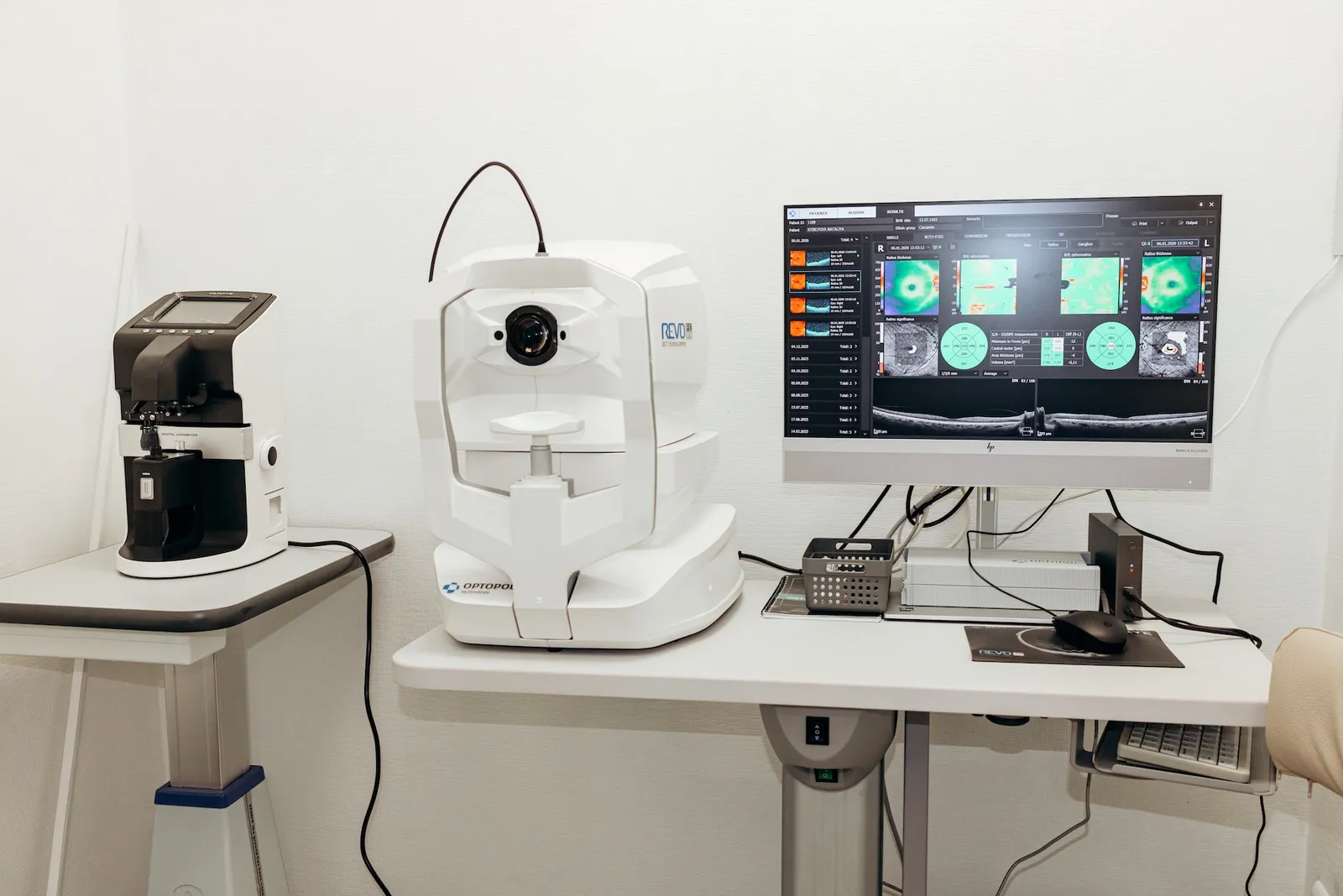
- Instrumental diagnostics: OCT, wide-pupil retinal examination, fundus photography.
- Determining the type of lesion: dystrophy, tear, edema, hemorrhage, degenerative changes.
- Selecting an individualized treatment strategy: laser photocoagulation, medication therapy, or surgical methods.
- Follow-up monitoring to control retinal stability and prevent complications.
Why Choose Us
- Modern diagnostic equipment for evaluating both central and peripheral retinal areas.
- Experienced retinal specialists working with dystrophies, tears, hemorrhages, and macular pathology.
- Precise laser photocoagulation to strengthen the retina and prevent detachment.
- Comprehensive approach: from diagnosis to post-treatment follow-up.
- Access to both therapeutic and surgical treatment in one center.
Diabetic Retinopathy
Diabetic retinopathy is a complication of diabetes mellitus in which the retinal blood vessels are damaged. The changes develop gradually and may not cause noticeable symptoms for a long time, but without treatment can lead to significant vision deterioration.
Symptoms and signs:
- gradual vision deterioration, blurriness;
- floaters, spots, flashes, image distortion;
- hemorrhages, vitreous opacities;
- narrowing of the visual field.
What happens with retinopathy:
- weakening and damage of retinal blood vessels;
- impaired oxygen supply to eye tissues;
- formation of angiopathy—vascular changes associated with diabetes, hypertension, or other systemic disorders;
- risk of progression to severe changes and complete vision loss.
Treatment methods:
- medication therapy in early stages;
- laser photocoagulation to strengthen weakened vessels and prevent hemorrhages;
- an outpatient procedure with a short recovery period;
- regular check-ups to monitor retinal status.
Regular examinations and timely laser treatment help slow the progression of retinopathy and preserve vision.

Age-Related Macular Degeneration
Age-related macular degeneration (AMD) is a chronic progressive disease of the central part of the retina (the macula) that leads to deterioration of central vision. It is one of the most common causes of vision loss in people over 55.
Key symptoms of AMD:
- blurry or distorted central vision—straight lines may appear wavy;
- difficulty reading, recognizing faces, and seeing fine details;
- appearance of a dark spot in the center of the visual field;
- reduced contrast sensitivity and image clarity.
Forms and course of the disease:
- dry AMD—the most common form; characterized by slow thinning of macular cells and accumulation of drusen;
- wet AMD—rapid progression due to growth of abnormal blood vessels; may cause sudden vision loss;
- risk increases with age and hereditary predisposition.
Diagnosis and treatment methods:
- optical coherence tomography (OCT) to assess macular condition;
- injection therapy for wet AMD to block the growth of abnormal vessels;
- risk-factor control: quitting smoking, normalizing blood pressure and cholesterol;
- nutritional supplements with lutein and zeaxanthin as recommended by an ophthalmologist.
Timely diagnosis and treatment help slow AMD progression and preserve the quality of central vision.
Peripheral Retinal Dystrophies
Peripheral retinal dystrophies are changes in thin areas of the retina that can lead to tears and increase the risk of detachment.
What it is
- Thinning of peripheral retinal zones
- Impaired tissue nutrition due to vascular changes
- Formation of tears with strain or trauma
Symptoms
- Flashes, lightning, or sparks in the field of vision
- Floating opacities (floaters)
- A feeling of shadowing from the side—an alarming symptom
- Worsened orientation in the dark
Risks
- High risk of retinal tears
- Possibility of detachment requiring urgent surgery
- Potential complete vision loss without timely treatment
Treatment
- Laser photocoagulation to strengthen weakened areas
- Prevention of tears and avoidance of detachment
- Conservative therapy for associated vascular disorders
- Regular follow-up with an ophthalmologist
Laser reinforcement of the peripheral retina is the most effective way to prevent detachment and preserve vision.
Chorioretinitis
Chorioretinitis is inflammation of the retina and the choroid that disrupts tissue nutrition and can lead to significant vision impairment. It most often develops due to infectious, toxic, or autoimmune processes.
Causes
- infectious diseases (viral, bacterial, parasitic);
- disorders of the ocular vascular system;
- systemic diseases (hypertension, diabetes mellitus, atherosclerosis);
- head trauma or prior surgeries;
- stress factors, intoxications, inflammatory processes in the body.
Symptoms of chorioretinitis
- rapid or gradual vision deterioration;
- spots, haze, sparks or flashes before the eyes;
- loss of part of the visual field;
- worsened orientation in the dark;
- image distortion or floating opacities.
Why it can be dangerous
- impaired retinal nutrition and progressive damage;
- risk of tears in inflamed areas;
- possibility of retinal detachment as the condition progresses;
- threat of severe or complete vision loss.
Treatment methods
- anti-inflammatory therapy tailored to the underlying cause;
- agents to improve microcirculation and retinal nutrition;
- laser reinforcement when there is a risk of tears or detachment;
- vitamin therapy and vascular support;
- regular ophthalmologist follow-up and monitoring.
Chorioretinitis requires prompt diagnosis and comprehensive treatment, as timely therapy helps preserve vision and prevent complications.
Need an ophthalmologist’s help?
Clear answers. Trusted support. Entrust your vision to experts.