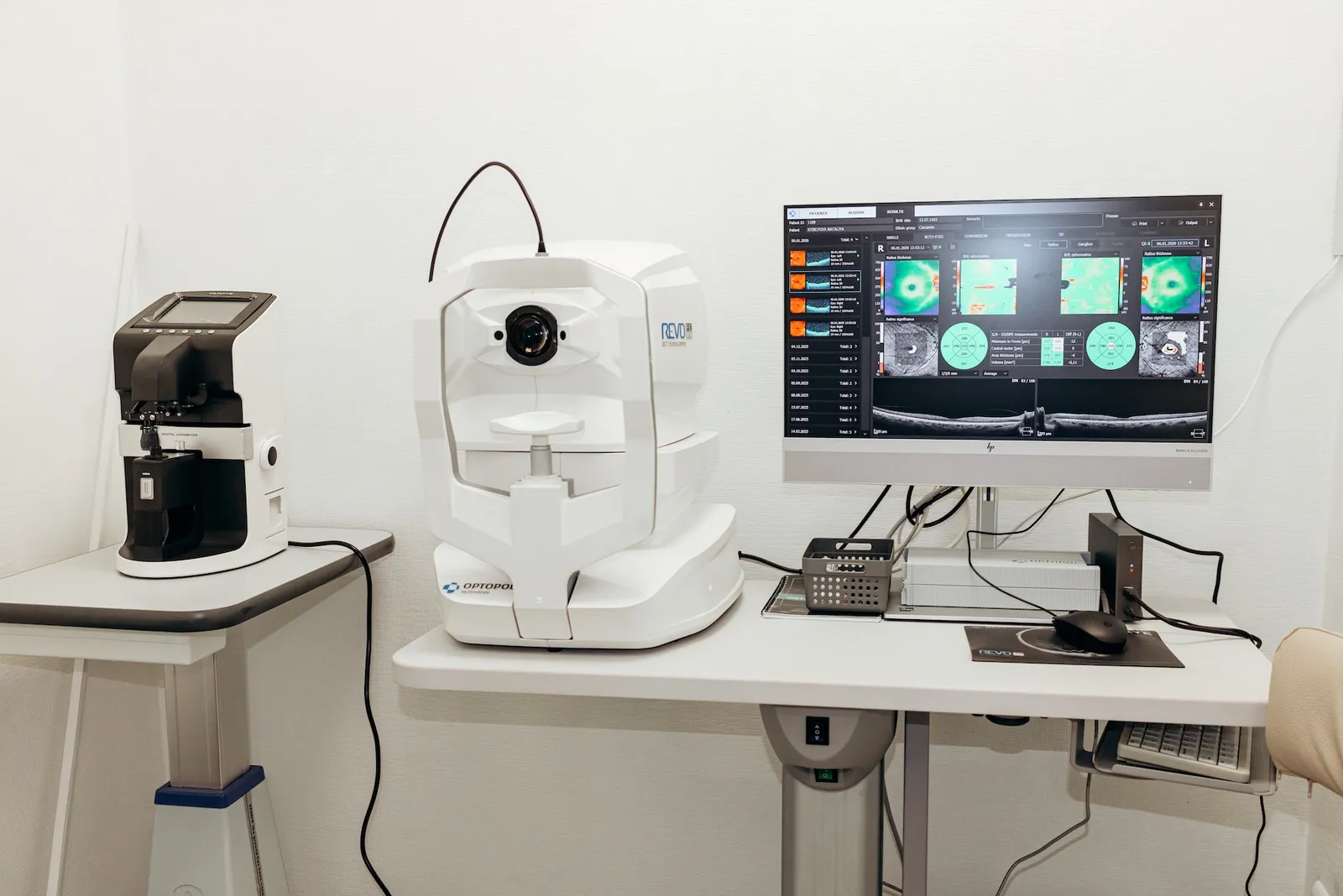
Surgery
Modern ophthalmic surgical techniques make it possible to effectively treat a wide range of diseases—from cataract and glaucoma to retinal pathologies. Microsurgical procedures are performed using high-precision equipment and atraumatic techniques, ensuring maximum safety, stable outcomes, and rapid visual recovery.
Indications
- Cataract of any stage that reduces visual quality.
- Glaucoma that cannot be controlled with medication.
- Retinal detachment or a high risk of its development.
- Retinal pathologies requiring microsurgical intervention.
- Complications or obstruction of the lacrimal drainage pathways.
- The need for intraocular medications (intravitreal injections).
How It Works
- Comprehensive preoperative diagnostics and selection of the optimal surgical method.
- Surgery performed under local or combined anesthesia.
- Use of microincisions and gentle technologies to minimize tissue trauma.
- Implantation of modern intraocular lenses for lens-related surgery.
- A short recovery period with regular ophthalmologist follow-up.
Why Choose Us
- High-precision microsurgical equipment and modern technologies.
- Experienced ophthalmic surgeons with narrow subspecialization.
- Atraumatic techniques that support faster recovery.
- Individual selection of the surgical approach and intraocular lens model.
- Full care pathway from diagnostics to completion of rehabilitation.
Glaucoma Surgery (Ex-Press)
Ex-Press is a modern micro-implant that helps effectively control intraocular pressure and slow the progression of glaucomatous neuropathy. The technology is used when medications are ineffective or when there is a high risk of vision loss, providing stable aqueous outflow and a gentle postoperative course.
Indications for surgery:
- glaucoma that is poorly controlled with drops or intolerance to medications;
- persistent elevation of intraocular pressure and risk of progressive visual field loss;
- worsening optic nerve status despite ongoing therapy;
- threat of vision loss in open-angle or secondary glaucoma.
What Ex-Press involves:
- implantation of a microstent under a scleral flap to create a new outflow pathway;
- controlled, stable drainage without excessive pressure fluctuations;
- minimal trauma—no tissue excision and preservation of ocular anatomy;
- a relatively short procedure performed under local anesthesia.
Advantages of Ex-Press:
- predictable and sustained reduction of intraocular pressure;
- faster recovery compared with classic trabeculectomy;
- lower risk of postoperative complications;
- preservation of natural ocular anatomy with the option for future interventions if needed.
Ex-Press is one of the most effective and gentle surgical options for glaucoma, helping preserve residual vision and prevent progressive loss of visual function.

Cataract Surgery with Intraocular Lens Implantation
Cataract surgery is the only effective way to restore lens clarity and regain sharp vision. Modern microsurgical phacoemulsification allows the cloudy lens to be replaced with a reliable intraocular lens (IOL) quickly, painlessly, and with predictable results.
Indications:
- reduced visual acuity due to lens opacification;
- blurred vision, a “film” in front of the eye, difficulty reading and working at near distances;
- increased light sensitivity, halos around light sources;
- double vision, image distortion, or reduced contrast;
- congenital or age-related cataract with a progressive course.
Procedure overview:
- microsurgical removal of the cloudy lens through a 1.8–2.2 mm microincision;
- ultrasound phacoemulsification—safe fragmentation and removal of the cataract;
- implantation of a high-quality, individually selected intraocular lens (IOL);
- the procedure takes 10–20 minutes and is performed on an outpatient basis under local anesthesia;
- same-day discharge with a short rehabilitation period.
Advantages of modern IOLs:
- high image quality and contrast after implantation;
- astigmatism correction options (toric IOLs);
- lens choices for different distances: monofocal, multifocal, EDOF;
- long-term stable results—the lens does not age or become cloudy;
- personalized optics selection based on the patient’s lifestyle.
Modern cataract surgery restores clear, high-contrast vision and significantly improves quality of life. A properly selected intraocular lens provides stable results for many years.
Intravitreal Therapy (Eylea, Vizkyu, Vabysmo, Ozurdex)
Intravitreal administration of modern medications is an effective and minimally traumatic method for treating retinal diseases accompanied by edema, hemorrhages, or abnormal vessel growth. The injection is delivered directly into the vitreous body, ensuring maximum drug concentration in the affected area.
Indications:
- age-related macular degeneration (wet form);
- diabetic macular edema;
- retinal vein or artery occlusions;
- pathologic vessel growth (neovascularization);
- intraocular inflammatory conditions, including posterior uveitis.
How the procedure is performed:
- the injection is administered into the vitreous body under topical anesthesia;
- the procedure takes 3–5 minutes and is virtually painless;
- strict adherence to high sterility standards in the procedure room;
- use of original medications (Eylea, Vizkyu, Vabysmo, Ozurdex);
- often performed as a course depending on diagnosis and treatment response.
Benefits of therapy:
- rapid reduction of edema and stabilization of vision;
- high efficiency in neovascular processes;
- targeted drug action with minimal systemic load;
- reduced risk of hemorrhages and disease progression;
- the possibility of long-term disease control with regular follow-up.
Intravitreal therapy is a gold standard in the treatment of complex retinal diseases, helping preserve vision and prevent severe complications.
Surgical Treatment of Eyelid and Lacrimal System Diseases
Diseases of the eyelids and lacrimal drainage system can cause discomfort, impaired ocular surface lubrication, chronic infections, and reduced quality of vision. Surgical methods help restore proper eyelid position, lacrimal duct patency, and the eye’s natural protective function.
Indications:
- ectropion or entropion;
- upper eyelid ptosis and other eyelid malpositions;
- lacrimal canal obstruction, dacryostenosis;
- chronic tearing or recurrent inflammation of the lacrimal sac;
- benign eyelid lesions (chalazia, papillomas, etc.);
- aesthetic concerns or post-traumatic changes.
Surgical methods:
- eyelid plastic/reconstructive procedures (correction for entropion/ectropion);
- ptosis repair and reconstructive interventions;
- restoration of lacrimal duct patency, probing and bougienage;
- dacryocystorhinostomy for lacrimal sac obstruction;
- microsurgical removal of lesions with attention to aesthetics;
- outpatient procedures with minimal recovery time.
Advantages of treatment in our clinic:
- precise, minimally invasive techniques with natural aesthetic outcomes;
- procedures performed by experienced ophthalmic surgeons;
- individual selection of techniques for both functional and cosmetic results;
- dynamic follow-up and support during the postoperative period.
Eyelid and lacrimal duct surgery restores the eye’s natural function, reduces discomfort, and helps achieve a harmonious aesthetic result.
Need an ophthalmologist’s help?
Clear answers. Trusted support. Entrust your vision to experts.